Shields Up: How Cybersecurity Quietly Wins You More Customers
Maybe you think of your cybersecurity as insurance: something you carry so a bad day doesn’t turn into a bad year. Maybe it’s filed somewhere between the printer and the guest Wi-Fi password, a thing that gets handled by whoever handles things. Or maybe you’ve never really thought about it at all, because nobody’s ever asked.
Most cybersecurity advice aimed at smaller businesses tells you to fix that by acting like a bigger one: bigger budget, bigger team, bigger stack. We think that advice has it backwards, and the reason is what your customers actually say they’re watching.
PwC’s 2024 Trust in US Business Survey asked more than 2,500 consumers what earns their trust in a company. The top answer wasn’t price. It wasn’t customer service, though that mattered too (74%). It wasn’t even the overall experience (73%). It was this: 79% of consumers said protecting their data is what earns their trust.
Now sit with this part for a second. In that same survey, 90% of executives believed customers highly trust their company. Just 30% of customers said they did. Sixty points of daylight between what leadership assumes is handled and what customers actually feel — and the thing customers named first is the thing that never makes the news, because nothing went wrong.
That’s the real story here. Cybersecurity isn’t just a shield you hold up after something bad happens. It’s a signal you’re sending before anything happens at all, whether you mean to send it or not.
Sensitive data protection: the proof, not just the prevention
Every business collects information customers would rather not see mishandled: names, payment details, health records, project files, the small stuff that adds up to someone’s whole relationship with you. Protecting it is the baseline job of cybersecurity. But the trust part isn’t the protecting. It’s the customer’s confidence that you’re protecting it, whether or not they ever have a reason to test that confidence.
That confidence gets built or broken in ordinary moments. A vendor who can answer “how do you handle our data?” in one plain sentence, instead of a shrug. A partner who tells you promptly if something looks off, instead of hoping you never find out. A business that treats a customer’s information like it belongs to the customer, not like it’s an asset to be mined.
Picture the ordinary version of this. A customer emails asking what happens to their information if they stop working with you. A business without a clear answer stalls, forwards the question along, and a week later sends back three paragraphs of legal language that don’t actually answer it. A business that’s done the work replies the same day with exactly what happens and when. Neither one meant to make a sales pitch. The second one just did.
Smaller businesses have an advantage here that’s easy to miss: you’re close enough to your customers to have this conversation directly. The big guys route it through a legal team and a 40-page privacy policy nobody reads. You can just tell someone, clearly, what you do and why. Shields up doesn’t have to mean locked down and unreachable. It can mean visible and plain.
Regulatory compliance: evidence, not a hurdle
If compliance is part of your reality (CMMC for manufacturers, HIPAA for healthcare, NYSDFS Part 500 for financial services, or something sector-specific to you), it’s tempting to treat it as a box to check for auditors and nobody else. That’s a mistake, and not just a paperwork one.
Compliance is one of the few places where your cybersecurity work becomes visible and provable. A customer can’t watch your backups run or your patches deploy. But they can see a completed assessment, a signed attestation, or a straight answer to a security questionnaire that used to make your stomach drop. That paperwork is evidence, delivered in a form procurement teams, insurers, and partners already know how to read.
There’s no bad weather here, just bad gear. Compliance work you’ve already done is proof you can hand someone without scrambling. Compliance you’re still avoiding is a forecast you already know is coming. Either way, being ready to show your work, calmly, when someone asks for it, is worth more to a relationship than being technically fine and unable to prove it.
This isn’t hypothetical anymore. Cyber insurance applications now ask pointed questions about multi-factor authentication and backup testing before they’ll even quote a price. Bigger customers increasingly push vendor-risk questionnaires down to every supplier, including the 15-person shop that handles their marketing or their books. None of that existed in a serious way ten years ago. All of it is a customer, in one form or another, asking the same question ahead of time: can we trust you with what we’re about to hand you?
Competitive differentiation: the advantage smaller businesses actually have
Back to the advice we started with, because this is where it does the most damage. Telling a smaller business to look like a bigger one assumes the bigger one is the thing worth looking like. It isn’t, and copying it means competing on the one axis where you’ll always lose.
A documented, mature security practice is still rare enough among smaller businesses that having one, visibly, sets you apart from competitors who don’t. We see it show up in vendor selection, in RFPs, and in renewal conversations more often than it used to. But the differentiation isn’t only “we have security.” It’s “we can show you, in one conversation, exactly what we do and why,” in a way a 500-person vendor with three layers of account management usually can’t.
You’re nimble. You’re small. There’s very little bureaucracy standing between “a customer asks a hard question” and “a customer gets a straight answer.” That’s not a disadvantage to compensate for. That’s the differentiator.
Why this is a loyalty story, not just a sales story
Winning a deal because you could answer a security question is one thing. Keeping that customer for years because you never gave them a reason to double-check you is another, and it’s the harder, more valuable one.
Trust works like a reserve. Every uneventful stretch you spend actually protecting a customer’s data adds to it. That reserve is what buys you the benefit of the doubt when something ordinary goes sideways: a slow response, a billing error, a vendor of yours that stumbles. A customer who already trusts you reads a mistake as an exception. A customer who doesn’t reads the same mistake as a pattern.
This is also where data protection and compliance become referral engines instead of overhead. A customer who’s had to fill out their own vendor-risk questionnaire, because their bank or their insurer asked them to, remembers who made that process painless on your end. They mention it, unprompted, to the next business owner complaining about the same headache. In a small-business world built on referrals and reputation, loyalty is rarely won with one big gesture. It’s built from a long run of small ones nobody had to think twice about.
Getting started, no mission control required
None of this requires becoming a security company overnight.
Designate someone accountable. Not a committee, not a someday-project, one person whose job includes knowing where things stand. It’s often the difference between “we’re working on it” and nothing moving at all.
Find a cybersecurity provider suited to your size and budget. What fits a 500-person company doesn’t fit a 15-person company. Look for a partner who explains things in plain English and treats “I don’t know what that means yet” as a normal thing to say out loud.
Commit to the process, not a single project. Trust isn’t a certificate you earn once. It’s a habit customers notice over time, in how consistently you handle their information and how honestly you talk about it.
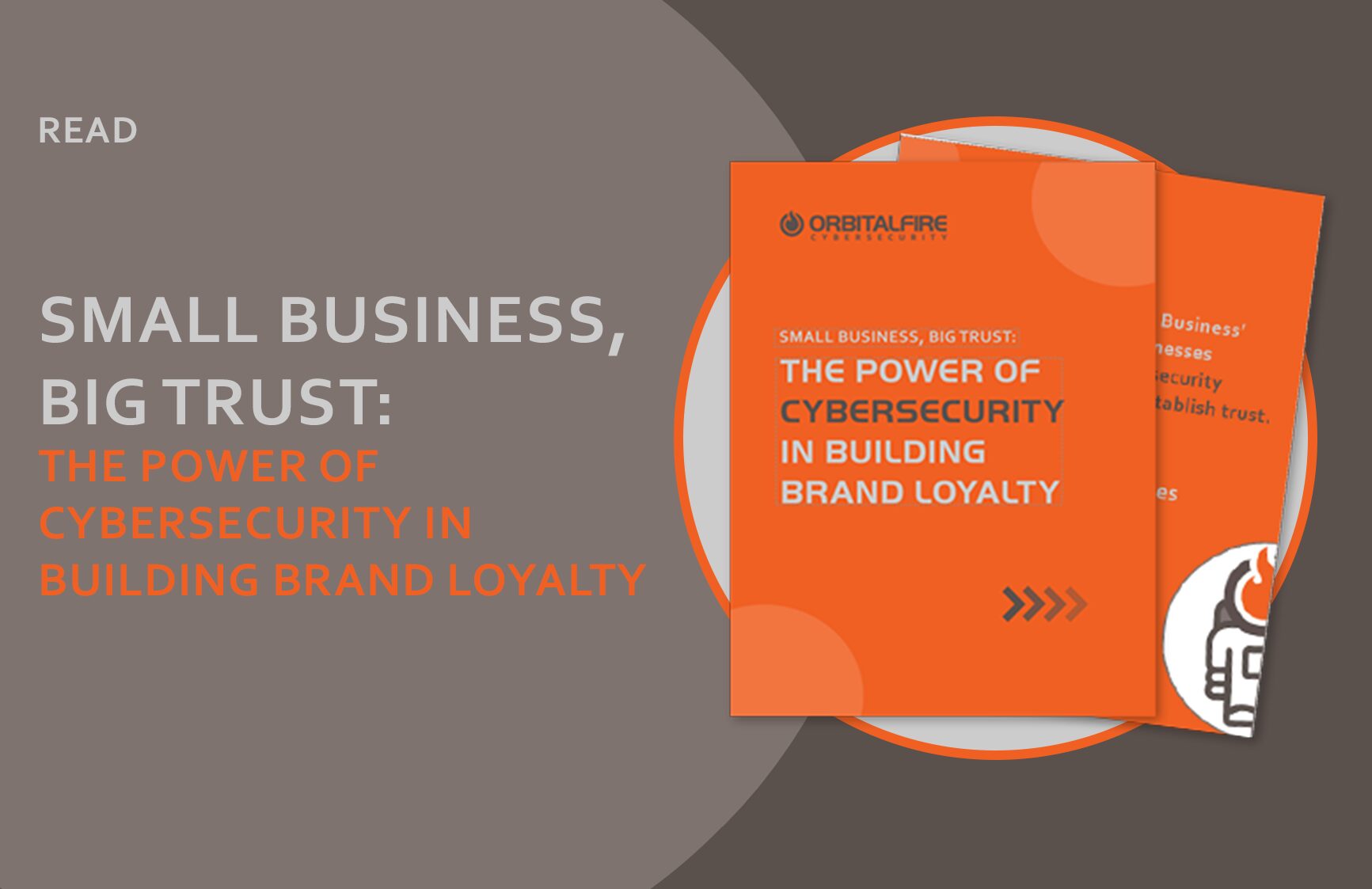
If you need to make this case to somebody else — a partner, a board, the person who signs off on the budget — The Power of Cybersecurity in Building Brand Loyalty is the short version, in a form you can forward.
You don’t need to build a security team to do this, and most smaller businesses shouldn’t try. The ones getting it right pair a human partner who understands their specific risk with the AI-assisted tools that handle the repetitive, always-on parts: monitoring, alerting, patch tracking. Humans make the judgment calls. The tools do the watching. That’s how a small team covers ground that used to take a much bigger one.
The payoff
Cybersecurity, done well and talked about plainly, does more than protect you. It helps you win more business, avoid more cybercrime, meet more expectations — from customers, from partners, and increasingly from the contracts and questionnaires that decide who gets the work.
None of this happens perfectly, and no one should claim it does. Every business doing this well still deals with a phishing email that almost worked or a patch that shipped a week late. The businesses customers trust most aren’t the ones insisting nothing ever goes wrong. They’re the ones who say so when it does, fix it, and keep talking straight about the rest.
You shouldn’t need to be a rocket scientist to get good cybersecurity, and you shouldn’t need to look like the big guys to earn real trust. If protecting your customers’ data, proving your compliance, or figuring out where to start is part of your reality right now, let’s have a conversation. Ready to Launch?
Frequently asked questions
Does cybersecurity actually affect whether customers trust a business?
Directly. PwC's 2024 Trust in US Business Survey asked 2,515 consumers what earns their trust in a company, and protecting their data came first at 79% — ahead of resolving concerns quickly (74%) and a consistent experience (73%). It outranked price. For a smaller business, that means security work is visible to customers whether or not you ever talk about it.
How can a small business prove its cybersecurity to customers?
Through the artifacts customers already know how to read: a completed assessment, a signed attestation, a straight answer to a vendor security questionnaire, evidence of multi-factor authentication and tested backups. A customer cannot watch your patches deploy, but they can see a document. Compliance work you have already done is proof you can hand someone without scrambling.
Why do customers ask smaller vendors about security now when they did not before?
Two things changed. Cyber insurance applications now ask pointed questions about multi-factor authentication and backup testing before they will quote a price. And larger customers push vendor-risk questionnaires down to every supplier, including the 15-person shop handling their marketing or their books. Both are the same question asked ahead of time: can we trust you with what we are about to hand you?
Is a documented security program really a competitive advantage for a smaller business?
It is, and not for the reason most advice assumes. The advantage is not matching a larger competitor's budget or stack. It is that very little stands between a customer asking a hard question and getting a straight answer. A 500-person vendor routes that through three layers of account management. You can just answer it.
Where should a smaller business start if none of this is in place?
Name one person accountable — not a committee, one person whose job includes knowing where things stand. Then find a provider sized for your business rather than one selling a scaled-down version of something built for much larger companies. Then treat it as an ongoing habit rather than a single project, because trust is not a certificate you earn once.
Do we need to hire a security team to earn that trust?
Most smaller businesses should not try. What works is pairing a human partner who understands your specific risk with AI-assisted tools that handle the repetitive, always-on parts: monitoring, alerting, patch tracking. Humans make the judgment calls, the tools do the watching, and a small team covers ground that used to take a much bigger one.