
Why Security Awareness Training Fails: How to Build Real Cybersecurity Culture

Most employees know what phishing is.
They’ve seen the training.
They’ve clicked through the slides.
They’ve passed the quiz.
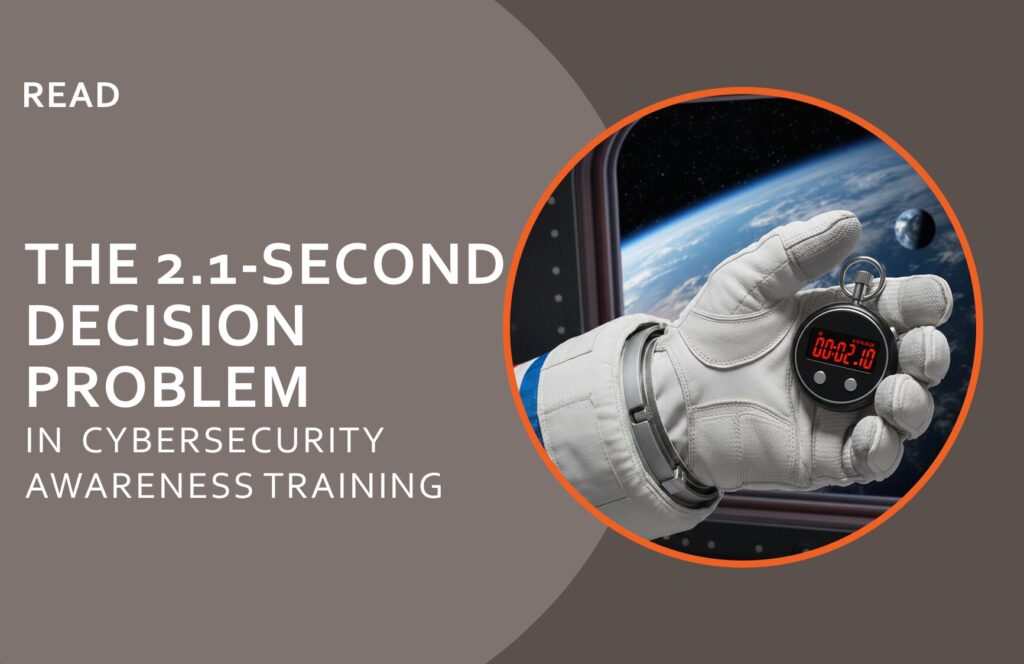
And then — in 2.1 seconds — they click the wrong link.
If you’re leading a smaller organization, this is the uncomfortable reality: awareness alone does not change behavior. And behavior is what determines whether wire fraud succeeds, credentials get stolen, or ransomware spreads.
To move beyond “we did the training” and into real risk reduction, you have to engage something deeper than logic.
You have to engage the limbic system; the part of the brain that governs instinct, emotion, and reaction.
In other words: the part that decides before thinking catches up.
Here’s how growing organizations can do that, without turning security into fear-based theater.
What Is Cybersecurity Culture?
Cybersecurity culture is the set of behaviors, expectations, and leadership signals that influence how employees handle risk in daily operations. It determines whether mistakes are reported quickly — or hidden.
-
How to Build Ownership Into Your Cybersecurity Culture
People protect what they feel connected to.
If cybersecurity feels like something “corporate” handed down from above, engagement drops. If it feels like something they helped shape, behavior changes.
Ask for Input
Instead of dictating training schedules and formats, ask:
- What time of day works best for training?
- What security topics feel most confusing?
This isn’t about outsourcing your strategy.
It’s about signaling: “This is ours.”
When employees feel involved in shaping the program, they develop skin in the game.
And the limbic system responds to ownership.
Make It Personal
People tend to take better care of something that feels like it belongs to them.
Security policies shouldn’t feel like rules imposed by someone.
They should feel like a shared commitment to protecting the organization everyone depends on.
That shift matters, especially in organizations under 150 employees where culture is tight and personal accountability carries weight.
-
Why Recognition Works Better Than Punishment
The limbic system responds strongly to status and recognition. Nobody wants to be at the bottom of the list and almost everyone appreciates a gold star. The brain responds to status. Recognition. Winning. So use it.
Publish Performance Data
Without shaming individuals, publish departmental results.
For example, if Accounting is at 36% and the Executive Team is at 55%, trust us – Accounting will notice.
You’ll see movement because visibility drives motivation.
In growing organizations, especially those with strong internal pride, friendly competition can drive meaningful improvement.
Reward Top Performers
Recognize individuals who:
- Consistently report phishing emails
- Complete training early
- Improve their performance
Public recognition costs nothing and it activates the desire to win, especially in growing companies where reputation inside the organization matters.
-
Why Emotional Storytelling Changes Security Behavior
The limbic system processes emotion faster than logic. Think of your favorite movie. Data informs, but stories move people in ways data alone ever can.
Rotate Messengers
Instead of security always coming from the CEO or IT, invite peers to share experiences:
- A compromised personal checking account.
- A near-miss with vendor fraud.
- A story about how quickly money can move once a mistake is made.
When the message comes from someone relatable, it lands differently.
Highlight Personal Benefits
Security training isn’t just a corporate obligation.
It protects:
- Their family’s finances
- Their personal devices
- Their home Wi-Fi
- Their identity
Frame it as free upskilling that makes them safer at work and at home.
That personal relevance engages instinct far more than policy language ever will.
-
How to Create an Ambient Security Culture
Security shouldn’t be an annual event. It should be part of the air your organization breathes. Not overwhelming. Not constant alarm bells. Just present.
Stitch Security into Core Values
Stitch security into your values.
If you value grit — following protocol under pressure is grit.
If you value integrity — protecting customer data is integrity.
If you value accountability — reporting suspicious emails is accountability.
Now security isn’t a separate program.
It’s part of who you are.
Use Tiny, Consistent Reinforcement
One large annual announcement does very little.
Many small touchpoints do much more.
- Short reminders
- Quick micro-trainings
- Brief reinforcement during meetings
- Recognition moments
At OrbitalFire, we deliver awareness training and phishing testing in small, interesting monthly sessions for our customers.
Just as it is when you’re trying to see gains at the gym or build a new skill, consistency beats intensity.
-
Why Punishment Suppresses Reporting
When someone clicks a phishing link, the instinct is to correct aggressively.
That backfires. Punishment triggers fear, which suppresses reporting, and
suppressed reporting increases damage.
If someone fails a simulation:
- Ask what confused them.
- Ask what would make training clearer.
- Ask what didn’t resonate.
That question triggers involvement and ownership.
Security maturity grows when employees feel safe reporting mistakes. Silence is far more expensive than error.
Why This Matters for Growing Organizations
For smaller organizations your culture is your strongest asset — and your biggest risk multiplier.
You likely don’t have:
- A dedicated internal cybersecurity team.
- A large compliance department.
- Layers of bureaucratic oversight.
Which means behavior carries more weight.
In smaller organizations, one mistake can move money fast.
Security awareness done poorly becomes checkbox compliance, but security awareness done intentionally becomes operational resilience.
At OrbitalFire, we build fully-managed cybersecurity programs for smaller organizations— integrating threat detection, incident readiness, compliance alignment, and structured security culture into one coordinated approach.
Because technology alone does not prevent incidents.
Behavior does.
And behavior shifts when the program engages more than just logic.
Quick Answers for Leadership
What is cybersecurity culture?
Cybersecurity culture is the set of behaviors, expectations, and leadership signals that shape how employees handle risk day to day. It determines whether suspicious activity is reported quickly, policies are followed under pressure, and mistakes are surfaced early — before they become incidents.
Why doesn’t traditional security awareness training change behavior?
Because knowing what to do is not the same as doing it in the moment. Most security mistakes happen in seconds, under time pressure. Behavior is influenced by habits, incentives, and culture — not just information delivered in an annual training session.
Should employees be punished for phishing mistakes?
No. Punishment often reduces transparency and discourages reporting. When employees feel safe admitting mistakes, incidents are contained faster. Reinforcement, involvement, and consistent feedback are more effective than fear-based responses.
How often should security awareness training occur?
Security awareness should be reinforced continuously through small, consistent interactions — ideally monthly. Short, ongoing reinforcement builds habits more effectively than a single annual training event.
Is culture really a cybersecurity control?
Yes. In growing organizations, culture directly influences how quickly threats are reported, how carefully processes are followed, and how openly mistakes are addressed. A strong security culture can significantly reduce real-world risk.
The Bottom Line
Cybersecurity failures rarely happen because someone didn’t know better.
They happen because, in 2.1 seconds, instinct overrode training.
If you want real risk reduction, security must:
- Feel personal
- Be reinforced consistently
- Reward good behavior
- Encourage transparency
- Live inside your culture
If your current program feels like a checkbox exercise and you suspect it’s not truly influencing behavior, it’s time to formalize a more structured approach.
You can see how we integrate structured security culture into fully-managed cybersecurity at orbitalfire.com.
Because protecting your organization from cybercrime, audits, regulations — and human instinct — requires more than awareness.
It requires leadership.


You May Also Like