
READ: “Do I Really Need That?” and Other Common Cybersecurity Questions from Small Businesses
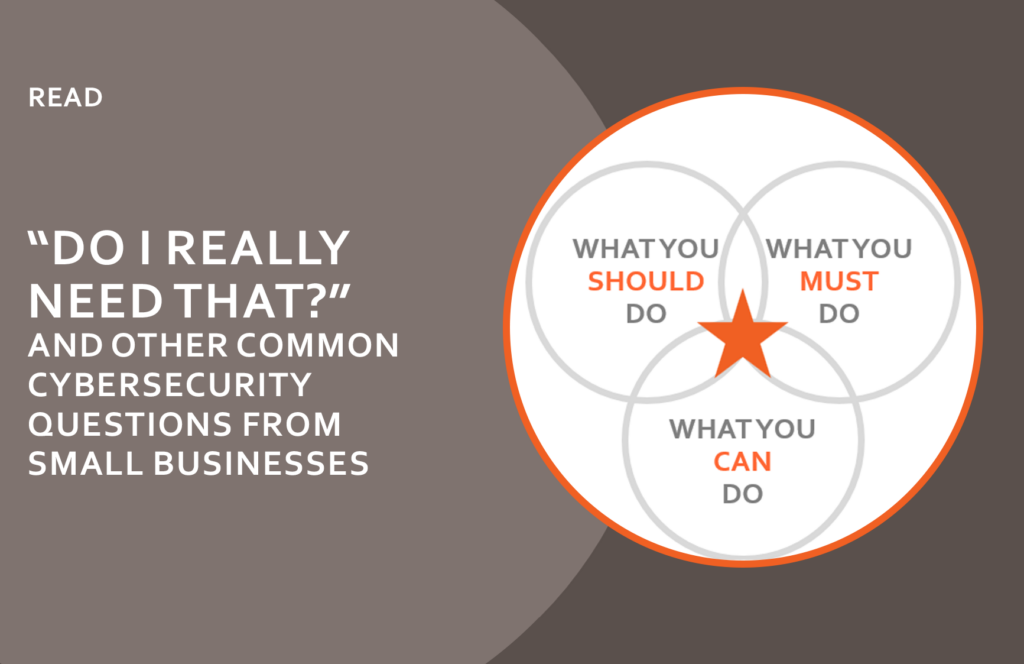

At OrbitalFire, we hear it all the time: “Do I really need that?” Training, policies, third-party oversight, incident response tabletops. It can feel like a lot, especially when budgets and time are tight. The truth is, we’ll never tell you that you need anything. It’s about understanding your level of risk, balancing it against your mission, and deciding what works for your business.
These are the six cybersecurity questions we hear most often from small business owners, and honest answers about whether each one is worth your time and money.
Can small businesses benefit from cybersecurity awareness training?
Yes, Awareness Training and Phishing Testing both help reduce human error, which is the leading cause of breaches. Awareness programs can significantly cut down on phishing clicks and password reuse.
Why it matters:
- Most cyber incidents start with a person, not technology.
- Training builds awareness and resilience across your team.
Trade-off: If you skip training, you accept a higher chance of employee-driven mistakes. Some businesses live with that risk; others prefer to invest in reducing it.
Take a Deeper Dive: The Real Cost of Skipping Awareness Training and our previously recorded live session Beyond Awareness: Advanced Tips for Securing Your Humans
Are written cybersecurity policies worth the effort?
Yes, policies set expectations and give employees clear guardrails, even for smaller organizations.
Why it matters:
- Removes ambiguity in decision-making.
- Creates consistency across the organization.
- Demonstrates accountability if customers or regulators ask.
- Required for many government regulations, cyber insurance, and increasingly, vendor or customer contracts.
Trade-off: Without policies, you rely on employees to improvise, increasing inconsistency and risk.
Should smaller organizations build an incident response plan?
Yes, an incident response plan allows you to act quickly when, not if, something goes wrong. And it’s not just about getting one on paper: just like fire drills, testing your plan through an Incident Response Tabletop will help ensure your plan will work and your team will know how to execute it if needed.
Why it matters:
- Reduces downtime and financial loss.
- Prevents chaos during a crisis.
- Protects your reputation with customers and partners.
What it can look like:
- A formal, tested document with roles and playbooks.
- Or a lightweight version to start with: a contact list, a call tree, and a “what to do first” checklist.
Trade-off: No plan = more disruption. The question is how much uncertainty and downtime your business is willing to tolerate.
Take a Deeper Dive: Crisis-Proof Your Organization: Build an Incident Response Plan That Works
Is Third-party risk management recommended for smaller businesses?
Yes, Third-party vendors and systems can be the hidden entry point for attackers. Oversight helps you understand where your extended risk lives.
Why it matters:
- Vendors, customers, and anyone with whom you share applications often hold your data or have system access.
- Their mistakes can become your incident.
What Third-Party Risk Management can look like:
- Vendor checklists and questionnaires.
- Contract clauses requiring security basics.
- Periodic reviews of critical suppliers.
Trade-off: Some small businesses accept vendor risk to save time, or because you can’t negotiate with certain application providers (think large systems like Office 365, or AWS). Others choose stronger oversight to protect critical contracts and customer trust.
Take a Deeper Dive: Third-Party Risk: Why This Could Be Your Biggest Cybersecurity Threat
Can my IT provider handle my cybersecurity?
Not fully. Your IT provider (or MSP) is essential for keeping systems up and running—patching, backups, hardware support, and network management—but they are not your cybersecurity provider
Why it matters:
-
IT keeps the lights on. Cybersecurity keeps the doors locked.
-
MSPs may offer tools like antivirus or spam filtering, but tools aren’t a strategy.
-
Modern cybersecurity for small businesses involves risk assessments, regulatory compliance (CMMC, HIPAA, FTC Safeguards), training, monitoring, incident response, and governance.
-
Cybersecurity is ultimately the business owner’s responsibility. Regulators, customers, and partners expect you to have protections in place. If something goes wrong, you, not your IT provider, are the one answering the hard questions
Trade-off: You can lean on IT alone and accept higher risk, or you can partner with dedicated cybersecurity experts, like OrbitalFire, who specialize in defending against today’s threats and meeting compliance standards. IT is critical. But IT ≠ cybersecurity.
Should leadership be directly involved in cybersecurity?
Yes! Leadership sets the tone. When leaders take security seriously, employees follow.
Why it matters:
- Leadership decisions determine budget and priorities.
- Culture starts with the leadership: if the C-suite ignores security, so will staff.
Trade-off: Hands-off leadership may work in the short term, but it often leads to gaps in accountability and culture that attackers can exploit.
Take a Deeper Dive: Why Cybersecurity Accountability for Small Businesses Starts with One Name
The OrbitalFire Perspective
We’ll never tell you “you must do this.” Instead, we help you answer two key questions:
- What level of risk are you willing to live with?
- Which strategies fit your business’s mission and resources?
Our role is to give you clarity, context, and confidence so your choices are informed, not accidental.
The Bottom Line
Cybersecurity for small businesses isn’t about needing anything. It’s about making deliberate, informed decisions about risk. Whether it’s training, policies, third-party management, or leadership involvement, every strategy has trade-offs.
Need help supporting the mission? We’re Here for You to help you assess your business’s current cybersecurity approach, then recommend and review opportunities for a strategy that fits your business mission.
Frequently Asked Questions
Can small businesses benefit from cybersecurity awareness training?
Yes. Awareness training and phishing testing both help reduce human error, which is the leading cause of breaches. Awareness programs can significantly cut down on phishing clicks and password reuse. Most cyber incidents start with a person, not technology. If you skip training, you accept a higher chance of employee-driven mistakes.
Are written cybersecurity policies worth the effort for smaller businesses?
Yes. Policies set expectations and give employees clear guardrails, even for smaller organizations. They remove ambiguity in decision-making, create consistency across the organization, and demonstrate accountability if customers or regulators ask. Written policies are also required for many government regulations, cyber insurance, and increasingly, vendor or customer contracts.
Should smaller organizations build an incident response plan?
Yes. An incident response plan allows you to act quickly when — not if — something goes wrong. Testing your plan through an Incident Response Tabletop helps ensure your team can execute it when needed. Even a lightweight version — a contact list, a call tree, and a ‘what to do first’ checklist — is far better than no plan. No plan means more disruption and downtime.
Is third-party risk management important for smaller businesses?
Yes. Third-party vendors and systems can be hidden entry points for attackers. Vendors, customers, and anyone with whom you share applications often hold your data or have system access — their mistakes can become your incident. Third-party risk management can look like vendor checklists, contract clauses requiring security basics, and periodic reviews of critical suppliers.
Can my IT provider handle my cybersecurity?
Not fully. Your IT provider is essential for keeping systems running — patching, backups, hardware support — but they are not your cybersecurity provider. IT keeps the lights on; cybersecurity keeps the doors locked. Modern cybersecurity for small businesses involves risk assessments, regulatory compliance (CMMC, HIPAA, FTC Safeguards), training, monitoring, incident response, and governance. If something goes wrong, you — not your IT provider — are the one answering the hard questions.
Should leadership be directly involved in cybersecurity?
Yes. Leadership sets the tone. When leaders take security seriously, employees follow. Leadership decisions determine budget and priorities, and if the C-suite ignores security, so will staff. Hands-off leadership often leads to gaps in accountability and culture that attackers can exploit.

You May Also Like