
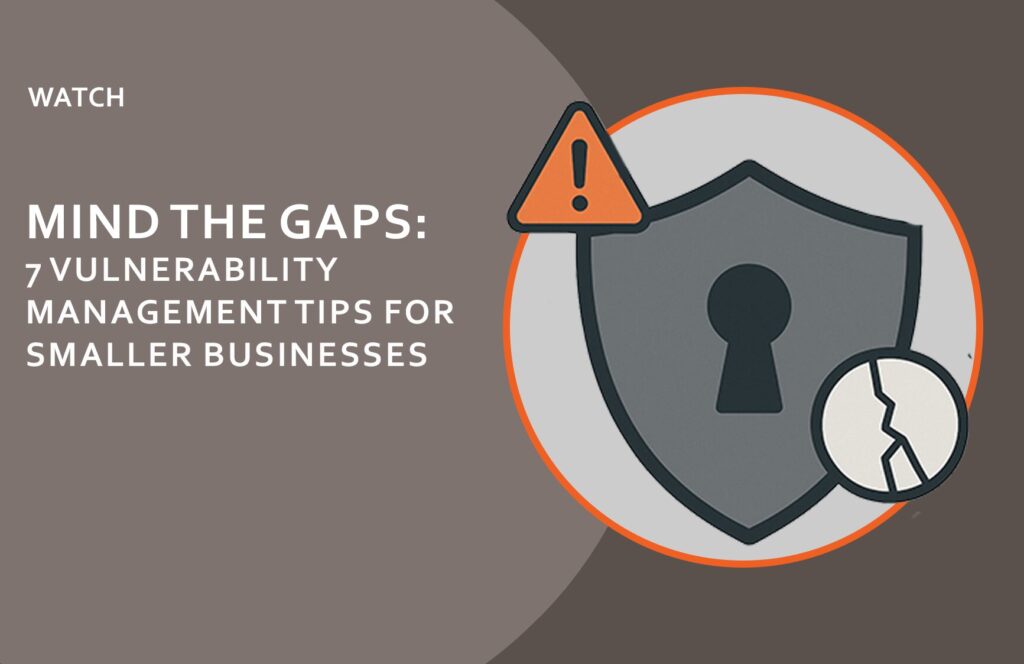
WATCH: Mind the Gaps: 7 Vulnerability Management Tips Every Smaller Business Needs

Previously a Customer-Exclusive Webinar
Watch the Full Video Here: Mind the Gaps: 7 Vulnerability Management Tips for Smaller Businesses
Most cyberattacks don’t start with some Hollywood-style hacker pounding away at a keyboard. They start with something far less dramatic: a quiet, ordinary security gap hiding inside a business that’s already stretched thin.
- A laptop that stopped checking in.
- A patch that didn’t apply the way everyone assumed it did.
- A configuration loosened “just for now” and never tightened back up.
These tiny cracks are exactly what automated attackers look for, and they’re looking all day, every day. That’s why vulnerability management isn’t an IT side project. It’s a business priority.
In our new on-demand session, Mind the Gaps: 7 Vulnerability Management Tips for Smaller Businesses, OrbitalFire’s VP of Services, Gary Braglia, breaks down how lean teams can finally get ahead of these gaps without turning security into some sort of scientific expedition.
Why Vulnerability Management Matters More Than Ever
Attackers aren’t targeting businesses because of who they are—they’re targeting them because of what’s exposed. And in a small business, exposure often comes from normal, everyday operations:
-
Remote work reshaping your environment
-
Drift in cloud configurations
-
Legacy apps that can’t be patched but still matter
-
Old accounts nobody remembered to close
Gary walks through exactly how these gaps form and why they’re so predictable, which is precisely why attackers love them.
The 7 Practical Tips You Can Use Immediately
The webinar covers a simple, repeatable vulnerability management process built for small teams. You’ll learn:
-
How to tighten your asset inventory (yes, it’s more than a spreadsheet)
-
Why routine scanning beats annual “check-the-box” scans every time
-
How to prioritize risk when everything feels important
-
When to patch—and when to mitigate instead
-
Why verification is the unsung hero of real security
-
How to spot patterns so gaps stop reappearing
-
How a monthly rhythm can shrink risk steadily without burning out your team
These aren’t theoretical. They’re the same habits OrbitalFire uses to help thousands of smaller businesses strengthen their defenses without adding chaos.
Who Should Watch This Video
If you’re a business leader who wants fewer cybersecurity surprises—or an IT pro juggling twenty other responsibilities—this session gives smaller businesses a practical roadmap to lower cyber risk month after month.
Watch the Full Webinar on YouTube
Ready to see the full walkthrough? Click below and start closing the gaps that attackers look for first.
Watch now: Mind the Gaps: 7 Vulnerability Management Tips for Smaller Businesses
Learn More about OrbitalFire Vulnerability Management Services
Ready to Join Our Orbit? Contact Us Today
Frequently Asked Questions About Vulnerability Management
What is vulnerability management for small businesses?
Vulnerability management is the ongoing process of identifying, prioritizing, and addressing security weaknesses in your systems before attackers can exploit them. For smaller businesses, this doesn’t mean running enterprise-grade security operations — it means having a regular rhythm of scanning, patching, and reviewing your environment so that obvious gaps don’t sit open for months. Most attacks targeting smaller businesses exploit known, patchable vulnerabilities, not zero-days.
How often should small businesses scan for vulnerabilities?
At minimum, monthly. Organizations with higher risk profiles — those handling regulated data, processing payments, or operating under CMMC, NYSDFS, or HIPAA — should scan more frequently. Scans should also run after any significant change to your environment: new systems, new cloud services, major software updates, or staff departures that trigger account reviews.
What is the difference between a vulnerability scan and a penetration test?
A vulnerability scan is automated — software checks your systems against a database of known vulnerabilities and flags what it finds. It’s fast, repeatable, and good for maintaining ongoing awareness. A penetration test is performed by a human tester who actively tries to exploit vulnerabilities to understand how far an attacker could actually get. Scans tell you what doors might be unlocked; pen tests tell you which ones an attacker could actually walk through. Both have a role; they’re not interchangeable.
What is asset inventory and why does it matter for vulnerability management?
You can’t protect what you don’t know exists. An asset inventory is a documented list of every device, system, application, and account that connects to your network or holds your data — including remote workstations, cloud services, and third-party tools. Without it, vulnerability scans miss unmanaged devices, patches get applied inconsistently, and departing employees’ accounts may stay active indefinitely. Asset inventory is the foundation that vulnerability management builds on.
What should small businesses do if they can’t patch a vulnerability immediately?
Prioritize based on risk — not all vulnerabilities are equally dangerous. Focus first on externally exposed systems, critical business applications, and anything that stores sensitive or regulated data. For vulnerabilities you can’t patch immediately, document compensating controls: network segmentation, enhanced monitoring, access restrictions, or additional logging. And set a deadline — unpatched “temporary” exceptions have a way of becoming permanent ones.

You May Also Like